
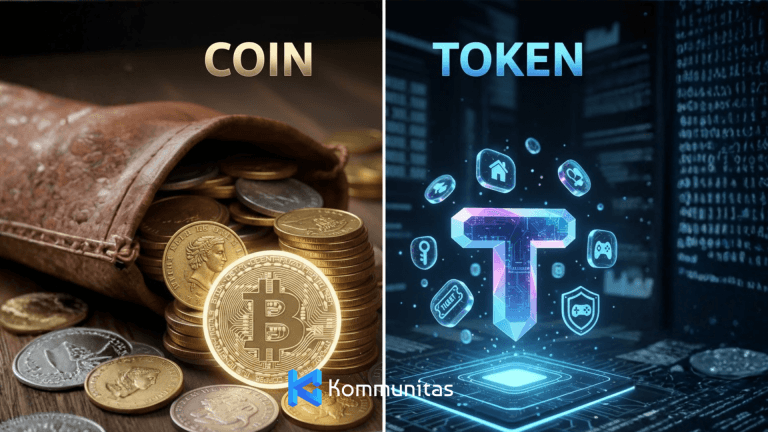
Understanding the distinction between coins and tokens is foundational for anyone navigating the crypto ecosystem—whether you're an investor, builder, or researcher. Although the terms are often used interchangeably, they represent different roles and technical structures within blockchain networks.
This guide breaks down their core differences and categorizes the three major types of crypto tokens: Utility Tokens, Security Tokens, and Stablecoins, complete with clear examples.
What Is a Crypto Coin?
A coin is a digital asset that operates on its own native blockchain. It is primarily used as:
A medium of exchange
A unit of account
A store of value
A means to pay for transaction fees or secure the network (staking/mining)
Examples of Native Coins
Bitcoin (BTC) – runs on the Bitcoin blockchain as a decentralized currency.
Ether (ETH) – powers the Ethereum network, used for gas fees and smart contract execution.
BNB (BNB) – native asset of BNB Chain supporting transaction fees and governance.
Coins are comparable to a country’s official currency: they are integral to the operations of the blockchain where they belong.
What Is a Crypto Token?
A crypto token is a digital asset that does not have its own blockchain. Instead, it is built and issued on top of an existing blockchain, such as Ethereum, BNB Chain, Solana, Polygon, or Avalanche.
Tokens are created using standardized smart contract frameworks such as:
ERC-20 on Ethereum
BEP-20 on BNB Chain
SPL on Solana
How Tokens Differ From Coins
Tokens are flexible and easier to launch, which is why most new Web3 projects—including GameFi, DeFi, AI, RWAs, and SocialFi—start with token issuance.
The 3 Key Types of Crypto Tokens
Crypto tokens can serve many purposes, but most fall into three core categories. Understanding these helps evaluate a project's structure, value, and regulatory implications.
1. Utility Tokens
Utility tokens provide access to a product, service, or function within a specific blockchain ecosystem. They are not designed as investments (although investors often speculate on their value).
Common Use Cases
Payment of in-app fees
Governance voting
Access to premium features
Staking for rewards
Participation in launchpads or DeFi programs
Examples
UNI (Uniswap) – used for governance in the Uniswap protocol.
MATIC (Polygon) – initially a token on Ethereum before Polygon launched its upgraded PoS chain.
LINK (Chainlink) – powers oracle operations and node rewards.
KOM (Kommunitas) – unlocks tier-less launchpad allocations and staking benefits.
Utility tokens are essential for protocol operations but do not represent ownership shares.
2. Security Tokens
Security tokens represent ownership or financial rights, similar to traditional securities.
They often provide:
Equity ownership
Profit-sharing
Dividends
Voting rights proportional to ownership
These tokens are typically regulated, requiring compliance with securities laws.
Examples
tZERO – tokenized equity platform operating under U.S. securities regulation.
Securitize-issued tokens – real-world assets (RWA) and equity shares in tokenized form.
Security tokens bring traditional finance (stocks, bonds, real estate) into the blockchain environment.
3. Stablecoins
Stablecoins are tokens whose value is pegged to a stable asset, usually fiat currency like USD. Their purpose is to provide price stability in volatile crypto markets.
Types of Stablecoins
Fiat-backed – collateralized by actual fiat reserves (e.g., USDT, USDC).
Crypto-collateralized – backed by over-collateralized crypto assets (e.g., DAI).
Algorithmic – pegged via supply-adjusting algorithms (high-risk, many have failed).
Examples
USDT (Tether) – largest stablecoin by market cap, backed by treasury assets.
USDC (Circle) – widely used in DeFi, transparent reserve reporting.
DAI (MakerDAO) – decentralized, crypto-collateralized stablecoin.
Stablecoins are the backbone of on-chain payments, trading pairs, and liquidity pools.
Coins vs. Tokens: Why the Distinction Matters
Understanding the difference is crucial for evaluating crypto projects, especially within launchpads and early-stage ecosystems:
For Investors
Coins often imply more established infrastructure and long-term utility.
Tokens reflect a project’s economic model, incentives, and real product usage.
For Builders
Launching a coin requires building a blockchain—complex and expensive.
Launching a token is faster, more flexible, and suitable for most dApps.
For Regulators
Security tokens fall under strict rules.
Utility tokens remain a gray area depending on jurisdiction and usage.
Final Thoughts
Coins and tokens serve different but complementary roles in the crypto economy. Coins anchor networks, while tokens power applications built on top of those networks. By understanding how each works—and the categories of tokens—you gain a stronger foundation for evaluating blockchain projects, especially in an environment where real utility matters more than hype.