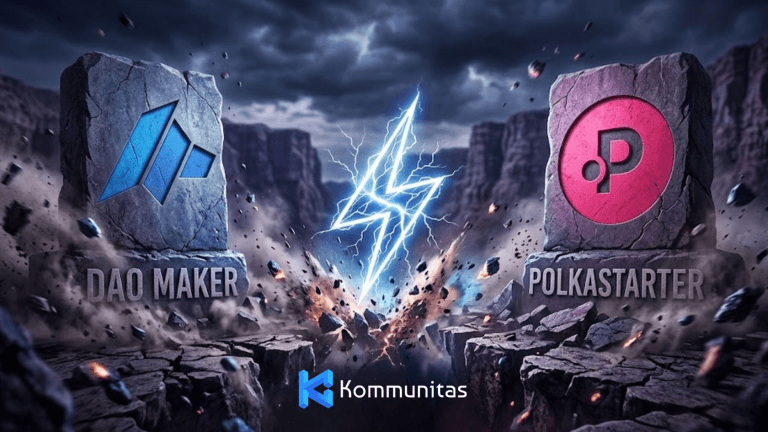
Finding early-stage Web3 gems used to feel like searching for a needle in a haystack. Today, crypto decentralized launchpads have streamlined that process, acting as primary gates for retail investors seeking initial DEX offerings (IDOs). If you have spent any time exploring crypto fundraising, two names have likely dominated your radar: DAO Maker and Polkastarter.
Both platforms boast impressive track records, millions of dollars raised, and massive communities. However, their fundamental architectures, allocation models, and financial barrier entries could not be more different. In this definitive guide, we will dissect how DAO Maker and Polkastarter stack up against each other so you can determine exactly where to commit your capital.
The Core DNA: How Each Platform Operates
To understand these ecosystems, you must understand their structural fundraising frameworks. While both function as IDO launchpads, they prioritize completely different user experiences and risk-mitigation strategies.
DAO Maker: The Heavyweight Retail Venture Capital Engine
Launched in 2018, DAO Maker specializes in retail-focused Web3 and decentralized finance (DeFi) infrastructure. It pioneered the Strong Holder Offering (SHO), a fundraising mechanism explicitly engineered to filter out short-term flippers in favor of long-term token holders.
DAO Maker stands out for its unique financial protection ecosystems. Over its history, it has frequently iterated on risk-adjusted models like Dynamic Coin Offerings (DYCOs) and structured refund systems designed to give users a financial safety net if a project underperforms post-launch.
Polkastarter: The Multi-Chain Curated Boutique
Founded in 2020 during the peak of the DeFi boom, Polkastarter is an open-source, decentralized fundraising platform built initially around cross-chain interoperability. It relies heavily on Fixed-Swap Pools, which allow projects to list tokens at a predefined purchase rate to ensure fundraising transparency and prevent front-running by malicious on-chain bots.
Rather than focusing on venture-yield complex mechanisms, Polkastarter relies heavily on curated quality, selecting fewer projects but ensuring rigorous standard auditing before listing them for public allowlists.
Allocation Systems: POLS Power vs. DAO Power
The biggest differentiator for everyday investors is how these platforms determine who actually gets to buy tokens. Both utilize internal tier systems backed by their native utility tokens (POLS and DAO), but the mathematical odds differ significantly.
The Polkastarter Blueprint: POLS Power
Polkastarter operates a raffle and lottery mechanic powered by POLS Power. To earn 1 lottery ticket, you must hold or stake 250 POLS. The platform splits users into fixed tiers where larger capital positions inherently boost your statistical probability of clearing an allowlist:
Bronze / Silver Tiers: Require lower entry barriers (starting at 1,000 POLS Power) but leave your probability of winning an allocation relatively low (averaging 14% to 30%).
Diamond Tier: Demands over 30,000 POLS Power. This unlocks guaranteed access allocations and removes the platform's standard 7-day cooldown rule (which benches lower tiers from entering consecutive sales after winning once).
The DAO Maker Blueprint: DAO Power
DAO Maker calculates your eligibility via DAO Power, an aggregator that blends the raw number of tokens you stake with the duration of your lock-up period. This format creates a highly competitive environment:
Public SHOs: Open to users holding no native platform tokens, though the competition is fierce, and winning probabilities are minimal.
Staking Tiers: Base entry levels require staking 500 to 1,000 DAO tokens to unlock a base tier. To feel truly competitive or guarantee substantial allocation caps (ranging from $1,000 to $5,000 per project), users generally scale up to advanced tranches demanding 10,000+ DAO tokens locked for 30 to 90 days.
Capital Comparison: Entry Requirements and Structural Specs
Step-by-Step: How to Participate in an IDO
Navigating the entry requirements for either ecosystem requires a meticulous wallet setup. Here is the operational workflow required to start:
Step 1: Fund an On-Chain Wallet
Acquire either DAO or POLS tokens from a supported centralized exchange or decentralized swap protocol. Withdraw these assets directly to a non-custodial EVM wallet such as MetaMask or Rabby.
Step 2: Establish Your Platform Power
On Polkastarter: Deposit your tokens into the official staking portal or hold them in your wallet for a minimum of 7 consecutive days to let your POLS Power mature.
On DAO Maker: Navigate to the Staking Vaults. Select a lock-up period duration ranging from 30 up to 1,095 days. Note that longer commitments significantly amplify your aggregate DAO Power.
Step 3: Apply for Project Allowlists
Browse the active project dashboards on your chosen platform. Submit individual allowlist applications for individual projects. You will be required to pass localized Know Your Customer (KYC) identity verification checks after pre-selection to remain compliant.
Step 4: Fund and Claim
If your wallet is selected in the lottery draws, return to the platform interface during the live pool window to fund your allocation using the designated stablecoins or native network gas tokens. Once the token generation event (TGE) concludes, manually claim your assets via the distribution dashboard.
The Alternative Paradigm: Why Tierless Systems are Disrupting the Status Quo
While both DAO Maker and Polkastarter offer access to premium early-stage projects, their structures carry a hidden barrier for the average crypto enthusiast: high capital drag. Staking thousands of dollars in native launchpad tokens just to secure a chance at a lottery ticket can push retail investors out of the equation entirely.
This bottleneck is precisely why next-generation ecosystems are rethinking fundraising models. On our native Kommunitas launchpad, we actively pioneer a tierless model to eliminate these exclusionary boundaries entirely. Instead of locking thousands of dollars into volatile capital assets to win a chance at an allocation, a tierless framework guarantees every participant an allocation proportional to their ecosystem involvement.
Furthermore, by moving away from heavy network gas congestion models, modern launchpads maintain affordable micro-transactions, ensuring that early-stage investing remains a democratic opportunity rather than a game played exclusively by crypto whales.
Frequently Asked Questions
1. Can I use the same wallet for both DAO Maker and Polkastarter?
Yes. Both launchpads integrate with MetaMask and standard EVM-compatible Web3 wallets. However, your POLS Power and DAO Power will be calculated independently based on the specific tokens held or staked on each platform's native interface.
2. What happens if I unstake my tokens early on DAO Maker?
DAO Maker enforces strict penalties for premature unstaking. Users who unlock their assets before their selected lock-up periods expire face high early unstake fees, which are redistributed back to long-term ecosystem stakers via the Venture Yield pool.
3. Does holding LP tokens count toward my allocation odds on Polkastarter?
Yes. Polkastarter calculates POLS Power by aggregating both raw POLS token holdings and supported liquidity provider (LP) tokens—such as Uniswap ETH-POLS or PancakeSwap BNB-POLS pairs.
4. Is an allocation guaranteed on either platform?
For entry-level tiers, absolutely not. Both systems rely on lottery mechanisms at lower tiers. To secure guaranteed allocations on Polkastarter or DAO Maker, you must accumulate top-tier statuses (such as Diamond tier on Polkastarter or maximum tranche levels on DAO Maker), which requires substantial up-front capital investments.
Conclusion: Tailoring Your Strategy
Choosing between DAO Maker and Polkastarter comes down to your personal portfolio goals and capital capacity. If you prefer complex, risk-adjusted ecosystems with built-in refund options and are willing to lock up tokens long-term, DAO Maker provides a powerful infrastructure. If you prefer curated, multi-chain boutique launches and straightforward ticket-lottery setups, Polkastarter stands out as an exceptional alternative.
Want to learn more about how decentralized launchpad models are changing the game? Read our extensive Crypto Launchpads Capital Requirements Comparison to see how these legacy ecosystems match up against emerging modern protocols.
Ready to completely skip the lottery system and secure guaranteed access to the next generation of Web3 projects? Explore our Kommunitas Official Launchpad Hub and experience the power of truly democratic, tierless investing today.
References:
Crypto Launchpads Capital Requirements Comparison 2026 - Kommunitas Blog
What Is Polkastarter (POLS)? - Binance Academy
DAO Maker Investment Guide: Trading Strategies & Platform Analysis - Bitget Academy
Top IDO Launchpads In 2026: Full Guide And Insights - Traders Union