TL;DR: Solana launched Solana Playground on 25 November 2026 — a browser-based development environment at playground.solana.com where developers can learn, build and deploy Solana programs without installing anything on their own machines. The new version adds a built-in AI agent that explains code and edits it alongside the developer, plus guided tutorials and ten sample programs. It builds on the open-source SolPg beta that has run since late 2022, and it is the third AI-related Solana launch this month, after solana.ai on 23 November and a confidential computing toolkit on 13 November.
Key Takeaways:
- Solana Playground runs entirely in the browser: write, compile, test and deploy Solana programs with no local Rust, CLI or Anchor install.
- The built-in AI agent explains code and makes edits on request, through a conversational interface — but the developer still decides what gets compiled and deployed.
- It includes guided tutorials such as "Hello Anchor" for beginners and "Lumberjack" for intermediate developers, plus ten sample programs and test tokens.
- The tool was built by developer Hoodies (@Hoodies_crypto) and grows out of the open-source SolPg project, live as a beta since late 2022.
- Playground is part of a wider November AI push: solana.ai for autonomous agents, a confidential computing toolkit, and refreshed documentation for AI coding assistants.
Solana has a developer onboarding problem, and it knows it. Before a new developer can write a single line of a Solana program, they typically spend hours installing Rust, the Solana command-line tools and the Anchor framework, then debugging the setup when versions disagree. Solana Playground, announced on 25 November 2026 and promoted by the network's main account on 27 November, is designed to remove that wall entirely: the whole development environment now lives in the browser, and an AI agent sits inside it to explain the code and edit it with you.
This article explains what Solana Playground is, what the AI agent can and cannot do, how to start using it, how it compares with the beta it replaces, and where it fits in Solana's wider push into AI tooling.
What Solana Playground Is
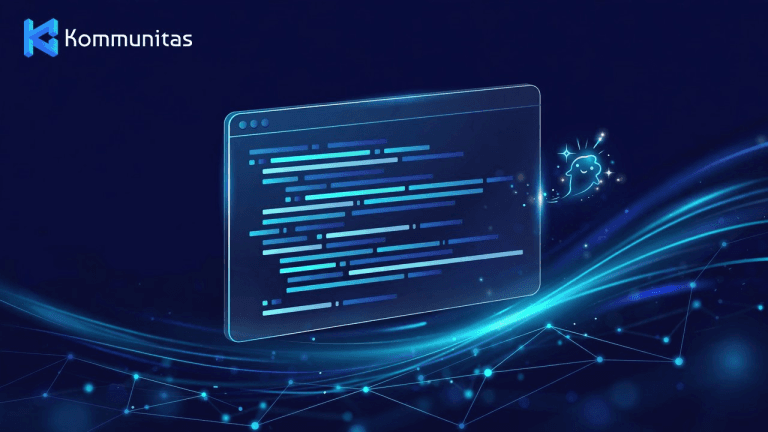
Solana Playground is a browser-based integrated development environment for Solana programs — the on-chain code, often called smart contracts, that powers decentralised applications. It is live at playground.solana.com. Developers can learn, build and deploy programs without leaving the browser, and without installing Rust, the Solana command-line tools or the Anchor framework on their own machines.
The announcement came from the official Solana developers account, @solana_devs, on 25 November, and the network's main account promoted the release on 27 November with a demo of the AI agent at work: "Introducing Solana Playground — where you learn, build and deploy Solana programs right in your browser. An AI agent explains the code and edits it with you."
The platform has a conversational user interface. Developers can issue commands to the AI agent, start new projects, learn through tutorials, or browse existing programs. It also offers access to test tokens through the Solana Developer Network, so new developers can deploy and try things out without spending real SOL.
For experienced developers, the appeal is speed: a disposable environment for prototyping, without touching a local setup. For beginners, it is lower friction — the first program can be running in minutes rather than after an afternoon of installation. That matters for a network competing for developer attention: every hour spent on setup is an hour not spent building.
What the AI Agent Does — and Does Not Do
The main new feature is the integrated AI agent. It can explain how different sections of code work, suggest changes, and make edits directly inside the workspace when the developer asks it to. The interaction is conversational: the developer describes what they want in plain language, and the agent responds in the editor.
It is important to be precise about the limits, because AI coding tools invite over-claiming. Nothing in the announcement suggests the agent can ship a finished application on its own. The developer still decides what gets compiled and deployed, and nothing ships without a human pressing the button. The agent is a pair programmer, not an autonomous builder.
That boundary is worth keeping in mind for anyone evaluating AI-written code. An agent can produce code that compiles and looks right while containing a subtle logic error — and on a blockchain, a logic error in a deployed program can be expensive and hard to fix. Developers should review anything the agent writes, test it on devnet before touching mainnet, and treat the AI as a way to move faster, not as a substitute for understanding the code.
Solana has not published any usage data for the AI version, and it has not said which model powers the agent. Those details may come later. For now, the honest summary is: an AI assistant inside a browser IDE, built by a community developer, that explains and edits Solana code on request.
How to Start: No Local Setup
Getting started takes minutes, and the steps below describe the workflow as presented in the launch announcement and coverage:
Step 1: open the Playground. Go to playground.solana.com. There is nothing to install — the editor, compiler and deployment tools all run in the browser.
Step 2: pick a starting point. Beginners can open a guided tutorial — "Hello Anchor" is the entry-level walkthrough, and "Lumberjack" covers intermediate concepts. There are three guided tutorials in total, plus ten existing programs to explore and modify.
Step 3: ask the AI agent. Use the conversational interface to ask what a section of code does, or to request a change. The agent edits inside the same workspace, so the developer can see exactly what changed before compiling.
Step 4: test with test tokens. The Playground offers access to test tokens through the Solana Developer Network, so programs can be deployed and tried out without real funds.
Step 5: deploy when ready. Programs can be deployed from the browser. As with any Solana development, deployment to mainnet should only happen after testing on devnet and a careful review of the code — including anything the AI agent wrote.
That last point is not a formality. A program deployed to Solana mainnet handles real value, and the network's history includes costly bugs in unaudited code. The Playground lowers the barrier to writing a first program; it does not lower the standard for shipping one.
Solana Playground vs the Old SolPg Beta
Solana Playground is not a brand-new idea. It builds on an existing open-source project, known among developers as SolPg, which has run as a beta at beta.solpg.io since late 2022. The move from a beta subdomain to an official playground.solana.com address is itself a signal: Solana is putting its own name behind the tool.
| Feature | SolPg beta (since late 2022) | Solana Playground (Nov 2026) |
|---|---|---|
| Address | beta.solpg.io | playground.solana.com (official domain) |
| AI agent | Not included | Built-in agent explains and edits code in the workspace |
| Learning material | Community examples | Guided tutorials ("Hello Anchor", "Lumberjack") plus 10 sample programs |
| Setup required | None — browser-based | None — browser-based |
| Test tokens | Available | Available via Solana Developer Network |
| Built by | Community developer Hoodies (@Hoodies_crypto) | Hoodies, now promoted as an official Solana tool |
The continuity is notable. Solana did not build a new tool in-house and sideline the community project — it adopted the community project and promoted it. That is a pattern the network has used before, and it sends a useful signal to builders: tools built for the ecosystem can become official infrastructure.
Solana's Bigger AI Push in November 2026
Playground is the third AI-related Solana launch this month, and the three releases cover both ends of the same process: writing the programs, and giving AI agents the tools to use them.
On 13 November, Solana introduced a confidential computing toolkit, built with Nito, that runs AI tasks on protected hardware. It is in beta and has not yet been audited — a caveat worth remembering before anyone relies on it for sensitive workloads.
On 23 November, Solana launched solana.ai, a hub for autonomous AI agents. It includes the open-source Solana Agent Kit, a Model Context Protocol (MCP) server, and an on-chain agent registry, alongside tools such as the Milo trading agent and pay.sh for USDC payments. The idea is that AI agents should be able to hold funds, pay for services and transact on-chain without human approval at every step.
On 25 November came the Playground. The logic is straightforward: solana.ai and confidential computing give AI agents ways to hold funds, pay for services and handle private data, while Playground — and refreshed developer documentation written for AI coding assistants — make it cheaper to write the programs those agents will use. At Breakpoint 2026, the Solana Foundation said more than 120 teams are building AI products on the network, and it outlined 11 startup concepts spanning AI inference, stablecoin payments, tokenized collectibles and housing futures.
For investors, the pattern is what matters, not any single launch. Solana is positioning itself as the chain where AI agents both live and transact. Whether that positioning pays off depends on whether developers actually build on it — and developer tooling like the Playground is exactly the kind of unglamorous infrastructure that decides that question.
What This Means for Builders and Investors
For builders, the practical benefit is time. A new developer can now go from zero to a deployed test program in a single browser session, with an AI agent to explain unfamiliar code along the way. For teams, the Playground is a fast way to prototype: an idea can be sketched, compiled and tested without setting up a local environment or a shared dev machine.
For the Solana ecosystem, the launch supports a longer-term bet. Developer activity is one of the most reliable leading indicators in crypto: networks that attract builders tend to attract users, liquidity and projects afterwards. A lower barrier to entry does not guarantee more developers, but it removes one of the most common reasons new developers give up in the first hour.
For investors, the honest framing is narrower. A developer tool does not move token prices by itself, and Solana's AI push is a multi-year story, not a single catalyst. What matters is whether the tooling translates into real applications — the trading agents, payment tools and consumer apps that solana.ai is meant to enable. The Playground is infrastructure for that future, not the future itself.
It is also worth noting how this connects to the launchpad world. A crypto launchpad like Kommunitas exists to give retail investors access to early-stage projects — and those projects increasingly need developers who can build on chains like Solana. Tools that grow the builder base grow the pipeline of projects that eventually seek funding through an IDO launchpad. And for holders, $KOM staking remains the way to participate in the Kommunitas ecosystem while that pipeline develops.
Risks and Limits to Keep in Mind
A balanced view needs the caveats as well as the enthusiasm. First, AI-generated code is not audited code. The Playground's agent can write code that compiles and passes a quick test while hiding a logic flaw — and on a blockchain, that flaw can be exploited. Anything destined for mainnet needs human review and, for anything holding real value, a professional audit.
Second, the surrounding AI infrastructure is early. The confidential computing toolkit is in beta and explicitly not yet audited. The agent registry, payment tools and trading agents on solana.ai are new, and the security properties of autonomous agents that hold funds are still being tested in practice.
Third, convenience has a trade-off. A browser IDE is ideal for learning and prototyping, but serious development still benefits from a local environment with version control, testing frameworks and CI pipelines. The Playground is a starting point, not a replacement for a professional workflow.
None of this diminishes the launch. It is a genuinely useful tool, built by a community developer and now backed by the network itself. But the right way to use it is as a fast on-ramp — learn, prototype, test — and then apply the same rigour to shipping as before.
Frequently Asked Questions
What is Solana Playground?
Solana Playground is a browser-based development environment at playground.solana.com where developers can learn, build and deploy Solana programs without installing anything locally. It includes a built-in AI agent that explains code and edits it, guided tutorials, ten sample programs and access to test tokens.
Do I need to install anything to use Solana Playground?
No. The Playground runs entirely in the browser — no Rust, Solana command-line tools or Anchor framework installation is needed on your own machine. You can write, compile, test and deploy programs from the browser, and use test tokens from the Solana Developer Network to try things out without real funds.
What does the AI agent in Solana Playground do?
The AI agent explains how code works and makes edits inside the workspace when the developer asks, through a conversational interface. It is a coding assistant, not an autonomous builder: the developer still decides what gets compiled and deployed, and nothing ships without human approval.
Who built Solana Playground?
Solana Playground was built by developer Hoodies (@Hoodies_crypto), credited in Solana's announcement. It grows out of the open-source SolPg project, which has run as a beta at beta.solpg.io since late 2022. Solana has now adopted it as an official tool at playground.solana.com.
Is Solana Playground free?
Access to the Playground itself is free, and developers can use test tokens from the Solana Developer Network to deploy and experiment without spending real SOL. Deploying to mainnet, as always on Solana, involves network transaction fees.
What else did Solana launch for AI in November 2026?
Two other AI-related releases preceded the Playground: a confidential computing toolkit on 13 November, built with Nito and still in beta and unaudited; and solana.ai on 23 November, a hub for autonomous AI agents with the open-source Solana Agent Kit, an MCP server and an on-chain agent registry. The Solana Foundation says more than 120 teams are building AI products on the network.
Disclaimer
This article is for informational and educational purposes only and does not constitute financial advice, investment advice, or technical advice. Features, availability and pricing of the tools discussed may change, and the confidential computing toolkit mentioned here is in beta and has not been audited. Always do your own research (DYOR) before deploying code or investing in any digital asset, review AI-generated code carefully before use, and consult a qualified adviser where appropriate. Kommunitas does not endorse any chain, tool, or product discussed in this article.
References
- Solana (@solana), "Introducing Solana Playground," X, 27 November 2026. https://x.com/solana
- Solana Developers (@solana_devs), Solana Playground announcement, 25 November 2026. https://playground.solana.com/
- Crypto Briefing, "Solana launches AI-assisted Playground for building programs in the browser," 27 November 2026. https://cryptobriefing.com/solana-playground-ai-developer-tool/
- Gadgets 360, "Solana Debuts AI-Powered Playground for Building Blockchain Applications," 27 November 2026. https://www.gadgets360.com/cryptocurrency/news/solana-debuts-ai-powered-playground-for-building-blockchain-applications-crypto-adoption-ai-in-crypto-markets-12385620
- KuCoin News, "Solana Launches AI-Powered Playground for In-Browser Development," 27 November 2026. https://www.kucoin.com/news/flash/solana-launches-ai-powered-playground-for-in-browser-development
- Toscale, "Solana Playground Gets an AI Agent: What You Need to Know," 28 November 2026. http://toscale.io/news-aggregator/solana-playground-gets-an-ai-a14801a22275-c4ca-7cd3-84c0-471410db8c16