The decentralized finance (DeFi) landscape is often described as a "Wild West," and for a good reason. While the potential for exponential growth is unparalleled, the risks—ranging from "rug pulls" to poorly executed ICO/IDO—are very real. For an investor, the launchpad you choose acts as your primary filter.
For concrete examples, see the top 10 crypto launchpads 2026.
A launchpad isn’t just a gateway to new tokens; it is a gatekeeper. But how do you know if the gatekeeper is actually doing their job? Credibility in the launchpad space isn't about flashy marketing or high-profile celebrity endorsements; it’s built on the boring, technical, and transparent foundations of security and accountability.
The Pillars of Launchpad Credibility
To move from a "lucky" investor to a strategic one, you must understand the four pillars that separate a reputable platform from a fly-by-night operation.
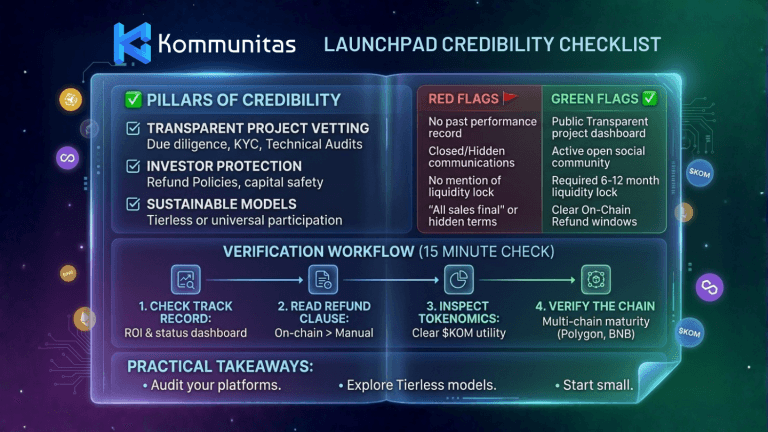
1. Transparent Project Vetting (The "Quality Over Quantity" Rule)
A credible launchpad does not list every project that comes its way. High-quality platforms employ a rigorous due diligence process that includes:
Team KYC: Knowing exactly who is behind the project.
Technical Audits: Ensuring the smart contracts are secure and free of vulnerabilities.
Tokenomics Analysis: Checking for "inflationary traps" or unfair whale distributions that could crash the price post-launch.
2. Investor Protection Mechanisms
The ultimate sign of a credible launchpad is how it handles failure. In Web3, things don’t always go according to plan. Platforms that prioritize their community implement Refund Policies. If a project fails to meet certain milestones or the token price drops below the IDO price within a specific window, investors should have the right to claim their funds back. This alignment of interests ensures the launchpad is incentivized to only pick winners.
3. Sustainable Participation Models
Be wary of "tier-heavy" systems that require you to hold thousands of dollars in native tokens just for a chance to participate. Credible platforms are shifting toward tierless or universal models. These models—often utilizing on-chain identity scores or "Human Passports"—allow for a more democratic distribution, ensuring that even smaller investors have a seat at the table without the barrier of massive staking requirements.
Practical Workflow: How to Verify a Launchpad in 15 Minutes
Before you connect your wallet, run through this checklist to verify if a platform is worth your trust.
Step-by-Step Verification:
Check the Track Record: Visit the "Ended" or "Completed" projects section. Look at the current price of those tokens vs. their launch price.
Read the Refund Clause: Does the platform offer a "Protective Shield" or refund option? If so, is it executed via smart contract or manually by the team? (On-chain is always better).
Inspect the Tokenomics: Ensure the launchpad’s own token ($KOM, for example) has a clear utility beyond just "holding."
Verify the Chain: Is the platform multi-chain launchpad? A platform that successfully migrates and operates across secure networks like Polygon and BNB Smart Chain shows technical maturity.
FAQ: Common Questions on Launchpad Safety
Q: Is a "Sold Out" IKO a sign of a good launchpad?
Not necessarily. While it shows high demand, it doesn't guarantee the project's long-term viability. Look at the project's progress three months after the sell-out to judge the launchpad’s vetting quality.
Q: Why do some launchpads require KYC?
KYC (Know Your Customer) is often a regulatory requirement to prevent money laundering. While it feels counter to the "anonymous" nature of crypto, it often adds a layer of institutional credibility and protects the platform from legal shutdowns.
Q: What happens if a project I invested in gets "rugged"?
On a credible launchpad, your funds should be protected by a refund policy. If the platform does not have one, your capital is likely at risk. Always prioritize platforms with a "Safety First" approach.
Your Next Steps
In the world of DeFi, your greatest asset isn't your capital—it's your ability to discern truth from hype. A credible launchpad serves as your shield, but you must still be the one to carry it.
Your Action Plan:
Audit your current platforms: Do they have a transparent refund policy?
Explore Tierless Models: Look for platforms that reward participation and on-chain reputation rather than just the size of your wallet.
Start Small: Test a platform's claim process and community support with a small allocation before committing significant capital.
Ready to start your journey with a platform that puts community protection first? Check out the latest on-chain opportunities and see how a decentralized, tierless model can work for you.
References
Blockchain Launchpads: A Comparative Study of Investor Protection Models - DeFi Research Quarterly
Smart Contract Security in Crowdfunding Platforms - Web3 Security Institute
The Evolution of Tierless Participation in Decentralized Launchpads - CryptoEconomics Journal
Kommunitas Universal Sale - CoinGabbar
Kommunitas Official Documentation: Refund Mechanism