
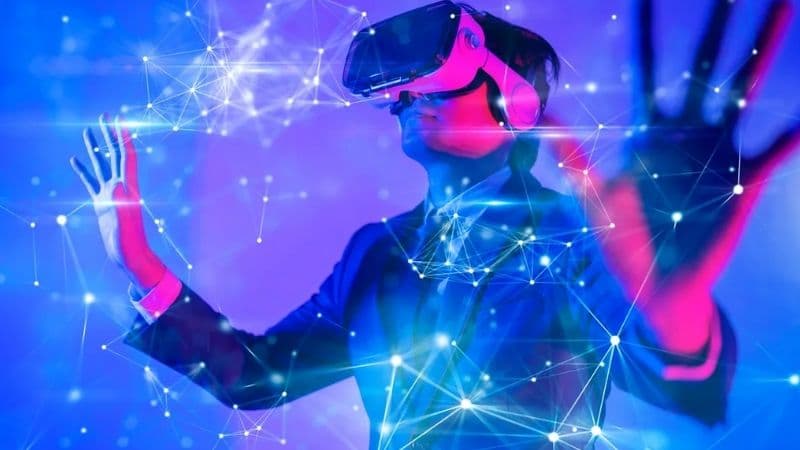
What exactly is the Metaverse, and does it truly exist yet as a single, unified universe? The Metaverse explained is a spatial computing platform built on the foundation of blockchain technology that offers digital experiences as a replacement for or a duplicate of the actual world, including essential facets of civilization like social interactions, currency, trade, economics, and property ownership. This article describes the notion, its characteristics, and its significance.
What Is The Metaverse, Exactly?
The Metaverse explained is a pervasive computing platform built on blockchain technology. It offers digital experiences as an alternative to or a copy of the real world, including major aspects of civilization like social interactions, currency, trade, economics, and property ownership. As the technology matures, user curiosity is rapidly shifting from the abstract—what it is—to the practical—what it does and how to profit from it. For brands and content creators, understanding these popular search queries is key to navigating the next evolution of the internet.
Appropriately, the metaverse explained can be compared to the internet of the 1970s and 1980s. As the groundwork for the new form of communication was laid, speculation grew over its appearance and how people would use it. Even though it was widely discussed, very few people grasped what it represented or how it would function.
In retrospect, nothing transpired exactly as some had hoped. As the Metaverse explained is expected to become an $800 billion business by 2024, it is time to clarify this hazy and confusing phrase. Tech giants like Apple, Facebook, Microsoft, and Google are putting a lot of money into making it happen.
Metaverse explained is a collection of three-dimensional worlds accessible via a web browser, mobile application, or headset. It would allow for real-time experiences and interactions across vast distances. An extensive ecosystem of web applications will result.
The Metaverse is currently popular in the digital world due to its seemingly limitless possibilities and goals. Numerous investors are attracted to the Metaverse because it is at the forefront of technological and digital advancements. It is a place where the real world and the digital world can coexist and have a big effect on important parts of everyday life.
Where Did The Concept Of The Metaverse Originate?
The phrase "metaverse" has existed for decades and is currently experiencing a rebirth. In Neal Stephenson's 1992 science fiction novel Snow Crash, the term was initially used to describe a VR-based alternative to the internet. Numerous Silicon Valley figures, including Amazon CEO Jeff Bezos, regard the book as a prognostication of the virtual world.
However, metaverse interpretations have been in popular culture for decades. There have been a lot of movies with different takes on the metaverse. The Matrix and Ready Player One may be the best-known.
Read Also: How do I utilize a Metamask token?
Is There Already A Metaverse?
The metaverse, or at least the version of it that is hyper-futuristic and indistinguishable from reality, does not yet exist. There is no single picture of how the complete metaverse should appear, and it is not known who will build it. It seems quite probable that the metaverse will not be the sole creation of a single corporation but rather a collaboration of several.
Arguably, video games provide the best instances of existing metaverses. Roblox, a phenomenally popular online platform, enables users to construct and then play games in a shared virtual area. Lil Nas X notably performed a virtual performance on Roblox in 2020, demonstrating the versatility of metaverses.
Second Life is most likely the most accurate representation of a fully-fledged metaverse. Users can create an avatar, explore a virtual world, purchase stuff from in-game shops, and interact with other players from around the world. These examples are just a taste of what's to come in terms of the potential of virtual living.
How Is The Metaverse Operational?
Since the Metaverse explained is mainly unbuilt, there is little consensus regarding its operation. In general, the metaverse is a digital ecosystem comprised of diverse 3D technologies, real-time collaborative software, and blockchain-based decentralized financial instruments.
How the metaverse develops will determine the degree of interoperability between virtual worlds, data portability, governance, and user interfaces. Lauren Lubetsky, a senior manager at Bain & Company, spoke at the 2022 MIT Platform Strategy Summit about the metaverse. She talked about three possible scenarios:
• Consumers mostly utilize the metaverse for entertainment and games, with little intention of ever fully immersing themselves in a virtual reality setting.
• Large, rival ecosystems govern the metaverse, such as Apple and Android meta worlds, which make no effort to communicate with one another.
• The Metaverse explained is a dynamic, open, and interoperable space, similar to the internet but in 3D.
How Can One Access The Metaverse?
Virtual reality (VR) and augmented reality (AR) are two technologies that are expected to play a big role in the future of the metaverse.
Virtual reality (VR) is a computer-generated, three-dimensional simulation that mimics, as closely as possible, the experience of being physically present in a physical space. Currently, this approximation of reality is often accessed via a VR headset that occupies the user's field of vision. Haptics, which include gloves, vests, and even full-body tracking suits, make it easier to interact with a virtual world in a way that feels more real.
Read Also How Worthy Your NFT Characters
• Augmented reality is much less immersive than virtual reality. It adds digital overlays to the real world using some form of lens. Users are still able to interact with their actual environment. Google Glass and car windshield heads-up displays are well-known augmented reality (AR) consumer goods.
Tuong H. Nguyen, a senior principal analyst at Gartner, told Lawton that it remains to be seen if virtual reality (VR) and augmented reality (AR) experiences will be the key interfaces of the metaverse and that what we currently have are predecessors or pre-metaverse solutions.
Currently, a majority of the metaverse-like experiences provided by gaming platforms like Roblox, Decentraland, and Minecraft may be accessed via browsers or mobile devices with a speedy Internet connection.
What Is The Current Purpose Of The Metaverse?
The online gaming business has decades of experience in the development of immersive virtual worlds. And to the degree that a proto-metaverse has a popular use, the large audiences that flock to Roblox, Epic Games, and Decentraland imply that playing games, developing virtual worlds.
Business organizations are exploring the use of metaverse applications, which expand on the virtual applications they introduced to facilitate distant work during the epidemic. Training in the workplace is an early use of metaverse technologies.
Esther Ajao, a journalist for TechTarget, stated that some hospitals are already employing virtual reality and augmented reality to train for basic medical operations. An augmented reality (AR) surgical system known as Medivis was just given the green light by the FDA. This system gives surgeons the ability to swiftly sync with the digital imaging system used in hospitals.
How People Earn Money from the Metaverse
I. Digital Asset Ownership and Investment (Passive Income)
These methods are based on the principle of ownership secured by blockchain technology and Non-Fungible Tokens (NFTs).
1. Virtual Real Estate Investment
Mechanism: Users purchase virtual plots of land or property (represented by an NFT) on popular Metaverse platforms like The Sandbox, Decentraland, or other emerging worlds.
How to Earn:
Speculation: Buying land low and selling it high after its perceived value increases, similar to real-world property flipping.
Leasing: Renting out land to developers or businesses that want to build virtual stores, offices, or event spaces. This provides a steady passive income stream.
Advertising Space: Selling virtual billboard space on owned property to brands and corporations.
2. NFT Trading and Flipping
Mechanism: Digital assets within the Metaverse (avatar clothing, weapons, 3D art, collectibles) are typically NFTs.
How to Earn: Buying popular or rare NFTs and reselling them at a higher price on NFT marketplaces, capitalizing on market trends and scarcity.
3. Metaverse Token Staking
Mechanism: Many Metaverse platforms have native utility tokens (e.g., MANA for Decentraland or SAND for The Sandbox). Users can lock up (stake) these tokens to earn rewards, much like earning interest on savings.
II. Providing Services, Creation, and Activities (Active Income)
These methods leverage a user's skills and time to provide value or services within the virtual world.
1. Play-to-Earn (P2E) Gaming
Mechanism: Playing blockchain-based games where players are rewarded with digital assets (crypto tokens or NFTs) for their time, effort, and achievements.
Activity Examples: Winning battles, completing quests, or breeding unique characters (Axie Infinity style). These rewards can then be sold on open markets.
2. Content Creators and Designers
This is one of the most lucrative paths for individuals with digital skills.
3D Asset Designers: Creating and selling unique clothing, accessories, avatar skins, or 3D object models that can be used across various Metaverse platforms. Successful virtual fashion designers have generated significant revenue from their digital collections.
Virtual Developers: Building games, experiences, or interactive installations on purchased virtual land. Creators on platforms like Roblox (which has a mature Metaverse ecosystem) have earned billions from their game creations.
NFT Creators: Designing original 3D art or animation collections to be sold as limited edition NFTs.
3. Virtual Professional Service Providers
Real-world professions are beginning to migrate to the Metaverse:
Virtual Real Estate Agents: Helping clients (individuals or corporations) find, purchase, or lease ideal virtual properties.
Metaverse Marketers: Assisting brands in designing immersive advertising campaigns, hosting virtual events, or setting up their digital storefronts.
Virtual Event Organizers: Selling tickets for concerts, festivals, fashion shows, or conferences hosted in the Metaverse.
4. Influencers and Virtual Service Workers
Metaverse Influencers: Building a large following with an avatar and partnering with brands to promote virtual or physical products.
Virtual Tour Guides or Hosts: Getting paid to give new users tours of Metaverse platforms or host events in virtual spaces.
Most earning methods in the Metaverse involve crypto and NFTs, which are highly susceptible to market volatility and carry significant risk. Success often depends on digital skills, crypto knowledge, and initial investment capital.