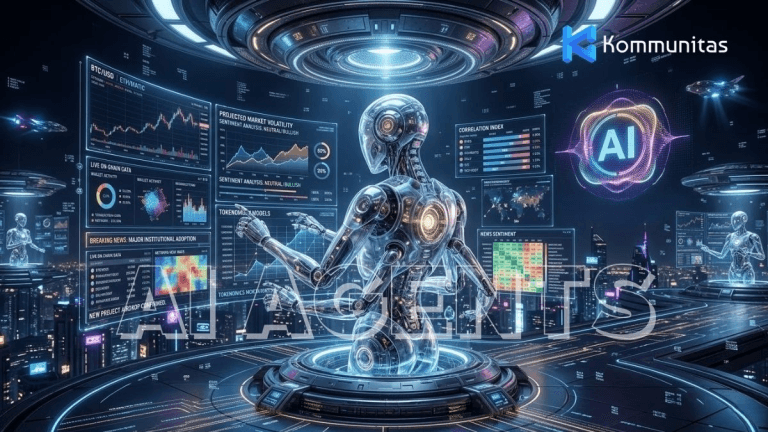
The Artificial Intelligence landscape in 2026 is unrecognizable compared to the relatively quaint era of chatbots in 2024. The "ChatGPT moment" has given way to the "Agentic Boom."
In 2024, AI was a sophisticated toy or a tool for text generation. We "chatted" with it, and it responded. The responsibility for executing tasks—booking a flight, writing code, executing a trade—remained with the human user.
By 2026, the paradigm has shifted from "Chatbot AI" (systems that respond to commands) to "Agentic AI" (autonomous software that independently executes complex tasks).
The Rise of the AI Agent
In 2026, you don't use five different apps to plan a trip. You have an AI travel agent. You give it a single command: "Plan a three-day business trip to Kyoto, staying under $2,000, and include three dinners at top-rated sushi places." The agent then independently communicates with airline APIs, hotel booking systems, and restaurant reservation engines, comparing prices, checking availability, and executing the bookings.
This transition isn’t limited to personal assistance. In the corporate world, AI agent fleets manage logistics, optimize supply chains, and even conduct autonomous product R&D. In finance, DeFi is now dominated by "Agentic Liquidity Providers"—AI agents that autonomously move liquidity across dozens of decentralized protocols to maximize yield in real-time.
This profound change in the fundamental nature of AI has created a massive, parallel shift in the crypto funding landscape.
Navigating the New Frontier: Investing in the Agentic Economy
For an investor, the landscape of 2026 offers immense potential but also significant complexity. We are no longer funding simple AI tools; we are funding autonomous software economies.
When evaluating a project, the question is no longer "How smart is this chatbot?" but rather:
What is the Agent’s "Proof of Utility"? Does it solve a real-world problem and generate revenue independently?
How is the Agent’s Economy Structured? Is the token used for transaction fees (gas) by the agent? Does it represent governance over a multi-agent network?
What are the Agent’s Safety Guardrails? What prevents it from going rogue, crashing a protocol, or behaving erratically?
Investing in this new class of assets requires a level of diligence that goes far beyond traditional project analysis. This is where a robust crypto launchpad becomes indispensable.
How a Launchpad Like Kommunitas is Useful in 2026
It’s important to clarify what Kommunitas is. While we continue to watch the exciting developments in agent-centric systems, Kommunitas remains a leading decentralized crypto launchpad, dedicated to bringing early-stage, vetted blockchain projects to a broad range of retail investors. We provide access to project pre-sales (often called IKO or Initial Kommunitas Offering) through a structure designed for fairness.
Even without transitioning to an autonomous, agent-vetted platform, Kommunitas remains highly valuable for an investor navigating the 2026 AI market:
1. Access to High-Quality AI Deals
The best AI and DePIN (Decentralized Physical Infrastructure Networks, a key requirement for training agents) projects in 2026 do not open their doors to everyone. They often launch through reputable launchpads. Kommunitas leverages its industry connections to secure allocations in some of the most promising early-stage ventures. We give our community access to deals that might otherwise be reserved only for venture capital funds.
2. A Rigorous Vetting Process
While AI agents are faster, there is still immense value in human intelligence. The Kommunitas team conducts a multi-stage, comprehensive due diligence process on every project we launch.
Team Analysis: We go deep into the professional backgrounds of the human founders (who are still crucial, even in agentic projects), checking for fraud and a history of success.
Tokenomics Evaluation: We ensure the project's token structure is sustainable, rewards long-term participation, and isn't just a "pump and dump" scheme.
Market Viability: We assess whether the project’s specific implementation of AI agents is actually needed and if they have a clear path to generating utility-driven revenue.
Code Review: While we aren’t AI auditors, we review the underlying smart contracts and security protocols to minimize technical risk for our users.
In 2026, this human vetting process acts as a critical "sanity check" against a sea of automated "Black Box" AI hype.
3. Fair and Transparent Allocation
Kommunitas' unique structure, known for being tierless or having a low barrier to entry, ensures that the agentic economy isn't just an "accredited investor-only" game. Our model provides a fair, mathematical way for holders of $KOM to gain a meaningful allocation in every launch, giving smaller investors a real chance to participate in the massive upside potential of this sector.
The AI landscape of 2026 is the most dynamic and complex investment environment we have ever seen. As we move from simple tools to autonomous economies, the role of a trusted, vetting-oriented launchpad is not just a luxury; it’s a strategic necessity. Kommunitas is committed to acting as that trusted gateway, providing secure and fair access to the projects shaping the next generation of the decentralized AI economy.
Disclaimer: This article is for informational purposes only and does not constitute financial advice. Digital assets are subject to market risks. Always Conduct Your Own Research (DYOR) and never share your seed phrase with anyone