What is a Transparent Vesting Schedule in Crypto?
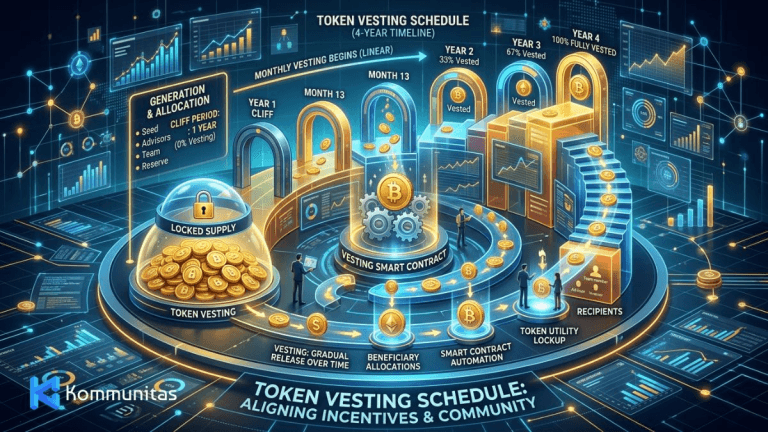
A transparent vesting schedule is a publicly verifiable timeline that dictates exactly when locked cryptographic tokens are released to early stakeholders, project teams, advisors, and public round investors. Unlike opaque private allocations, a transparent schedule is hardcoded into on-chain smart contracts. This allows anyone to verify token release frequencies, cliff periods, and circulating supply expansions via a block explorer, eliminating the risk of unannounced insider selling.
The Core Problem: Exploding Supply and "Rug Pull" Anxiety
Many crypto investors have fallen into the same trap: a project launches with massive hype, the token lists on a decentralized exchange (DEX), and within hours, the price plummets. More often than not, this isn't a traditional exploit—it’s the result of poorly managed or completely hidden vesting terms.
Without a clear, locked, and publicly verifiable timeline for when team members, seed investors, and advisors can claim their allocations, retail participants are left trading in the dark.
Vesting prevents early stakeholders from dumping their entire allocation at launch, which would instantly collapse the token’s market value. However, the schedule is only as good as its transparency.
How Transparent Vesting Protects Public Round Participants
When a launchpad enforces fixed, smart-contract-backed distribution rules, it fundamentally changes the dynamic between projects and the community. True transparency shifts the focus from speculation to measurable milestones.
1. Mitigating Post-Listing Dump Risks
When a token goes live, a transparent schedule outlines exactly how much supply enters the circulating pool. For instance, a healthy structure might dictate a 10% release at the Token Generation Event (TGE), followed by a 1-month cliff (a period where no tokens are released) and a linear monthly distribution over 6 months.
Because this data is public, the market can efficiently price in upcoming supply expansions rather than being blindsided by a sudden influx of millions of tokens.
2. Aligning Team Incentives with Project Longevity
Opaque schedules allow project teams to unlock their allocations far too early. On a transparent, community-centric platform, the team’s tokens are typically locked for 12 to 24 months. This ensures that the builders remain incentivized to develop the product, secure partnerships, and maintain a healthy ecosystem, as their personal financial reward is tied to the long-term value of the network.
3. Verification via On-Chain Smart Contracts
In Web3, "don't trust, verify" is the golden rule. Leading platforms do not merely list vesting terms on a static PDF or a Medium blog post; they hardcode them into audited, on-chain vesting contracts. Anyone can plug the contract address into a block explorer like BscScan to verify exactly when the next claim function becomes active.
Evaluating Tokenomics Before You Commit
To protect your capital, analyzing a project's release cadence should be a mandatory step in your pre-investment research strategy. When reviewing upcoming IKOs, keep this scannable checklist in mind to judge the health of a project's distribution timeline:
- TGE Unlock Percentage: Is the initial unlock reasonably low (e.g., 10–20%)? An excessively high TGE unlock often triggers immediate sell pressure.
- The Cliff Duration: Is there a buffer period for the team and seed investors before their linear unlocks begin? A robust cliff protects public round buyers during the critical early weeks of price discovery.
- The Claiming Mechanism: Are tokens pushed to wallets automatically, or must users connect to a secure claiming portal? A decentralized claiming portal ensures users get their tokens exactly when the smart contract allows.
Building a Safer Launchpad Framework
Ultimately, transparent vesting is just one pillar of a comprehensive investor protection framework. Platforms that successfully maintain long-term ecosystem health combine clear distribution timelines with strict project vetting and robust refund policies to guard user capital against bad market conditions.
By demanding on-chain clarity from day one, decentralized launchpads ensure that early-stage crowdfunding remains a fair, secure, and viable pathway for the entire Web3 community.