
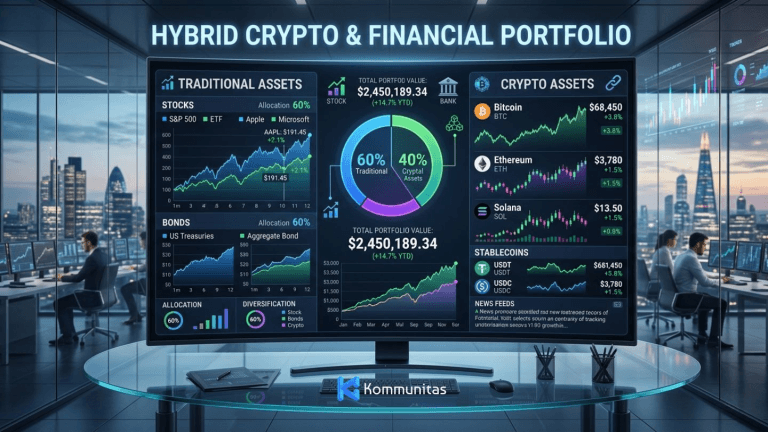
The financial landscape is ever-evolving, and with the advent of cryptocurrencies, investors are faced with both unprecedented opportunities and unique challenges. While traditional assets like stocks, bonds, and real estate have long been the bedrock of wealth creation, the digital revolution has introduced a powerful new asset class: cryptocurrencies. For many, the choice feels like an "either/or" proposition—either embrace the extreme volatility of crypto or stick to the perceived stability of traditional legacy markets. But what if there was a way to harmonize these two worlds, leveraging the unique strengths of each to create a more resilient and rewarding investment strategy?
A hybrid crypto portfolio is an innovative investment model that strategically integrates cryptocurrencies into an existing or new traditional asset allocation rather than completely abandoning legacy finance. By blending the steady growth models of conventional stocks or bonds with the high-upside potential of digital assets, investors can achieve optimized diversification, mitigated downside volatility, and direct exposure to the future of decentralized finance.
Whether you are a seasoned investor looking for an alpha edge or a crypto newbie wanting to dip your toes in wisely, understanding how to construct hybrid portfolios is your next crucial step in navigating the modern investment era.
Why Hybrid? Balancing Innovation with Stability
The core philosophy behind a hybrid portfolio is diversification, but with a modern, technological twist. Traditional assets offer a level of stability, regulatory backing, and historically proven compounding growth. Cryptocurrencies, on the other hand, represent rapid technological innovation, often exhibiting asymmetric growth potential and acting as a non-correlated vehicle during traditional market downturns.
Diversification for Risk Management: A key tenet of sound investing, diversification spreads risk across completely different asset structures. By adding cryptocurrencies, which frequently move independently of macroeconomic bond indicators or equity markets, you can significantly lower your portfolio's macro correlation and reduce its overall systemic volatility.
Enhanced Return Potential: Cryptocurrencies have demonstrated historical periods of explosive, exponential growth. A measured, calculated allocation to digital assets provides a powerful performance booster, elevating overall portfolio returns beyond what might be achievable through traditional indices alone.
Exposure to Cutting-Edge Tech: Investing in crypto is also an active investment in underlying blockchain networks, Web3 ecosystems, and DeFi—sectors poised for massive future institutional integration. A hybrid approach allows you to participate in this generational innovation without betting your entire net worth on a single sector.
A Modern Inflation Hedge: In an era marked by shifting monetary policies and inflationary concerns, certain digital assets, particularly Bitcoin, are increasingly viewed by global institutions as digital stores of value. Similar to physical gold, they offer an algorithmically scarce hedge against the long-term devaluation of fiat currencies.
Building Your Hybrid Foundation: Key Principles
Creating a successful hybrid crypto portfolio requires thoughtful planning, rigorous research, and emotional discipline. It is not about throwing capital blindly at trending tokens; it is about strategic asset integration.
Define Your Strategic Goals and Risk Tolerance
Before allocating a single dollar, define what you are hoping to achieve. Long-term wealth accumulation, capital preservation, or aggressive generation? Your underlying goals will dictate your asset mix. Be brutally honest with yourself: cryptocurrencies are highly volatile. While hybrid frameworks aim to smooth out the bumps, a segment of your capital will still experience heavy swings. You must know your exact threshold before investing.
Start with a Strong Traditional Anchoring
For the vast majority of investors, the foundation of a hybrid portfolio should consist of traditional, liquid, and well-researched legacy assets. This acts as a stable anchor against market shifts. Think of it as your safety net. From there, you can execute a strategic crypto allocation.
While there is no one-size-fits-all allocation percentage, a common and prudent starting point for a balanced portfolio is anywhere from 5% to 15% of your total investable capital, adjusting higher or lower based on your absolute conviction and risk threshold.
Focus on Blue-Chip Digital Assets First
When first integrating digital assets, prioritize established networks. Focus the majority of your crypto allocation on foundational assets like Bitcoin (BTC) and Ethereum (ETH). These assets offer the highest liquidity, massive developer network effects, and clear regulatory frameworks, making them substantially safer than small-cap, highly speculative alternative projects.
Practical Workflow: Integrating Crypto into Your Portfolio
To safely transition into a balanced hybrid investment framework, follow this step-by-step practical workflow:
Step 1: Evaluate Your Current Asset Allocation
Review your existing traditional investments, including stocks, index funds, mutual funds, real estate, and cash reserves. Understand your current volatility exposure and identify specific low-performing sectors where adding a high-growth asset class could improve your overall risk-adjusted returns.
Step 2: Determine Your Allocation Targets
Based on your goals, isolate a specific percentage of your liquid capital for your crypto allocation. For example, a moderate investor might settle on a 7% target. This capital should be seamlessly integrated into your broader financial plan, treated as a long-term holding, and ideally be capital you are emotionally prepared to see fluctuate.
Step 3: Segment Your Crypto Tiers Wisely
Tier 1 (Core Holdings - 70-80% of Crypto Share): Allocate the vast majority of your crypto weight to Bitcoin and Ethereum due to their undeniable market dominance and institutional adoption.
Tier 2 (Growth Infrastructure - 20-30% of Crypto Share): Consider strong projects with undeniable utility, such as layer-1 networks like Solana, interoperability chains like Polkadot, or decentralized oracle networks like Chainlink. Always skip hyper-speculative meme coins or unvetted tokens during your foundational setup phase.
Step 4: Secure Your Access and On-Chain Storage
Reputable Platforms: Buy your assets through highly liquid, compliant, and well-established cryptocurrency exchanges.
Self-Custody Infrastructure: For your larger long-term holdings, never leave your funds sitting permanently on an exchange. Transition your digital assets onto a secure hardware wallet to maintain full control of your private keys. Remember the golden rule of blockchain: "Not your keys, not your crypto."
Step 5: Implement a Dollar-Cost Averaging (DCA) Strategy
Instead of timing the volatile markets with a lump-sum entry, break your entry capital down into fixed amounts invested at regular intervals (e.g., weekly or monthly). Utilizing a disciplined DCA approach removes human emotion, mitigates the risk of buying local market peaks, and smoothly averages out your baseline purchase price over time.
Step 6: Maintain a Strict Rebalancing Schedule
Periodically audit your hybrid portfolio on a quarterly or semi-annual basis. If crypto experiences an explosive bull run, it may expand to occupy 30% of your total portfolio, exposing you to higher risk than intended. Rebalance by taking profits from your crypto tier and distributing them back into your traditional assets to lock in gains. Conversely, if crypto underperforms, systematically allocate capital from your legacy assets to buy the dip and return to your target allocation.
Hybrid Portfolio Management Framework
FAQ: Your Hybrid Portfolio Questions Answered
Q1: Is a hybrid crypto portfolio suitable for total beginners?
Yes, absolutely. In fact, a hybrid portfolio is far more suitable for beginners than going 100% into digital assets. By anchoring your wealth with stable, traditional legacy assets, you can actively gain exposure to the incredible upside of blockchain technology while dramatically reducing the intense learning curve and emotional stress caused by raw market volatility.
Q2: How often should I rebalance my asset allocation?
For most long-term investors, rebalancing quarterly or semi-annually is the optimal sweet spot. It prevents you from over-trading or incurring unnecessary transaction fees and taxes, while still successfully forcing you to buy low and sell high to maintain your target risk profile.
Q3: What are the primary risks of a hybrid strategy?
The primary risks are market volatility within the crypto segment, shifting global regulatory frameworks, and smart contract or exchange security vulnerabilities. However, the exact purpose of a hybrid structure is to minimize these exact threats by offsetting them with stable, fully regulated traditional asset classes.
Q4: Should I invest in early-stage Web3 projects or launchpads?
For advanced investors with higher risk tolerances, allocating a small percentage of your crypto tier toward early-stage project funding or a centralized launchpad can yield incredible returns. However, vetting these requires extensive research. Beginners should master how to choose best crypto launchpad architectures and protocols before moving past basic blue-chip assets.
Q5: How do capital gains taxes affect a hybrid crypto portfolio?
Taxation varies extensively by country and jurisdiction. In most regions, selling crypto, trading one token for another, or rebalancing your portfolio are considered taxable events. It is highly recommended to use automated crypto tax tracking software and consult a certified digital asset accountant to maintain absolute compliance.
Conclusion: Embrace the Evolution of Investment
The world of wealth management is no longer a binary choice. The hybrid crypto portfolio represents a sophisticated, forward-thinking investment paradigm that perfectly respects the historic reliability of legacy financial institutions while positioning your capital to capture the disruptive growth of decentralized networks. By thoughtfully synthesizing these two asset classes, you unlock unprecedented avenues for capital appreciation while maintaining institutional-grade risk management.
This isn’t about chasing short-term hype or speculation; it is about creating a robust, highly adaptive financial framework that can weather macroeconomic shifts and thrive in an increasingly digitized global economy. Take the foundational insights learned here, conduct your own exhaustive research, and begin scaling into a diversified strategy today.
Your Next Step: Evaluate your current net worth allocation, select a secure hardware wallet provider, and outline a disciplined dollar-cost averaging plan to safely introduce digital assets into your portfolio.
Crypto Investment Disclaimer
This content is provided strictly for informational and educational purposes only and must not be construed as professional financial, investment, legal, or tax advice. Cryptocurrencies and digital assets involve extreme market volatility, structural risks, regulatory uncertainties, and potential smart contract vulnerabilities. Past performance of any traditional or digital asset class is never a guarantee of future financial returns. Always conduct your own thorough, independent research, complete exhaustive due diligence, and consult a certified financial advisor before committing capital to any financial asset.
References
Diversification in Modern Portfolio Theory – Investopedia Financial Index
The Role of Bitcoin as an Inflation Hedge – Fidelity Digital Assets Research Report
Understanding Blockchain Technology and Asset Allocation – Gartner Research
Cryptocurrency Custody and Security Best Practices – National Institute of Standards and Technology (NIST)
Dollar-Cost Averaging and Rebalancing Frameworks – Vanguard Investment Insights