
Since decentralized applications (dApps) are web3's building blocks, it's crucial to develop methods of accessing them. You may find it easier to engage with the growing ecosystem of decentralized apps if you use a reputable dApp browser.
To a person's surprise, this exact function can be found in the Trust cryptocurrency trust wallet browser. The following tutorial provides an overview of the various options for enabling web browsers for decentralized applications on the Trust cryptocurrency wallet.
What is the Trust Wallet?
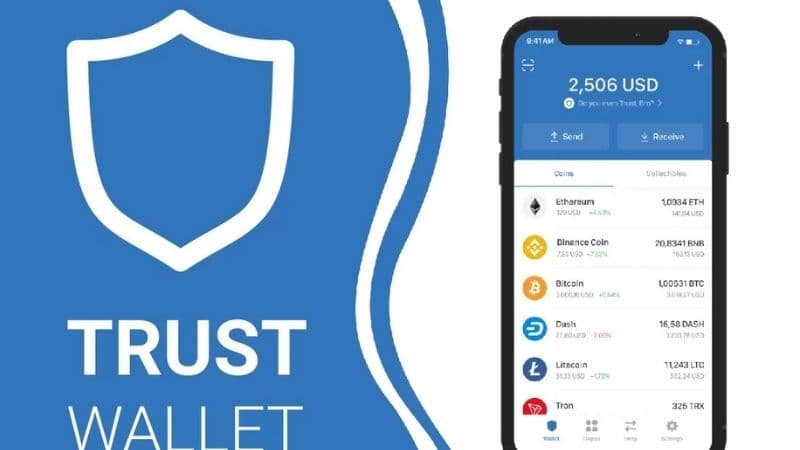
Trust is a cryptocurrency wallet program for receiving, storing, and managing cryptocurrency on a mobile device. One of the unique aspects of Trust is the requirement for users to sign in to their wallets in order to manage them securely on their mobile devices. Learn the basics of both blockchain technology and decentralized applications (dApps) before diving into how to activate the trust wallet browser.
Binance, a prominent cryptocurrency exchange, has released a product called Trust, which is powered by Ethereum and designed to keep consumers' digital money safe. Keep in mind that it was not made with browsing decentralized apps in mind. However, the fact that you can use this feature on your mobile devices, especially your iOS devices, is encouraging.
Definition of dApp Browsers
Determining what it is and how it works as a decentralized app browser is the next step before turning it on. A decentralized app browser is a versatile, user-friendly interface for accessing and navigating distributed apps.
In order to fully take advantage of what the web3 has to offer, users can take advantage of the Trust wallet browser by logging in with their Trust app account. The facilitation of a strong decentralized ecosystem that can aid users in activating, connecting, accessing, and searching for new dApps is one of the primary goals of dApp browsers.
When utilizing the Trust app's dApps browser, what kinds of programs are available? In order to demonstrate the utility of the Trust app decentralized application browser, PancakeSwap Exchange is a promising solution. In the Trust cryptocurrency trust wallet browser, it is currently among the most popular apps available.
It functions as a decentralized exchange, letting users buy, sell, and store their crypto assets from any of their mobile devices. To what end does PancakeSwap's dApps browser exist? Since PancakeSwap does not work with traditional monetary systems, a decentralized app browser is required.
Methods for Activating dApp Browser on Trust Wallet
Learning the fundamentals of dApp browsers and Trust crypto lays the groundwork for investigating solutions for enabling dApp browsers on the Trust crypto wallet. For access to dApps, though, you'll need to install a crypto wallet app on your mobile device first.
You might use the search function to find the cryptocurrency software in either the Google Play Store or the Apple App Store. After installing the software, users can sign up for an account and link it to the app to gain access to the decentralized app browser. Let's have a look at how to activate the Trust crypto trust wallet browser on several platforms.
Enabling dApps Browser on Android Devices
The Trust crypto wallet's dApps browser is more accessible for Android users than it is for iOS users. In just three easy actions, Android users may begin using the dApp browser Trust wallet has to offer.
You Can Use Your Android to Access Trust Wallet
After installing Trust on your Android device and making any necessary adjustments, you can launch the wallet by tapping its icon. Sign in with your Trust crypto wallet credentials before activating dApps in your browser.
Change Preferences
The app's navigation bar is located at the very bottom of the screen, so you'll need to scroll down to access it. Next, open the menu that appears after clicking "Settings," and then look for "Preferences" there. Simply click on the result once you've located it.
Enable the dApps Browser
Last but not least, use the toggle on the left side of the screen to enable the Trust wallet dApp browser. Once Trust's dApps have been enabled, the main page will feature a dApps browser menu in its footer. As you can see, activating trust wallet browser enable on android devices does not require any particularly clever workarounds.
Read Also: How to Add Money to Trust Wallet: A Simple Guide
Why Is Trust Wallet Important for the Future?
The Trust crypto wallet has a significant benefit due to its unique capabilities, which allow the dApps browser to be used across several devices. Borrowing and lending crypto assets and liquidity protocols in Defi are only two examples of the growing popularity of decentralized applications built on top of financial services. To have a deeper understanding of the dApp ecosystem, it's best to get your hands dirty and try them out for yourself.
You can use the trust wallet browser to not only view dApps, but also store and manage the cryptocurrency you'll need to make use of them. If successful, the Trust crypto wallet might help smooth the way for crypto consumers to switch to using decentralized applications. The Trust app and similar tools may provide a crucial link to the emerging decentralized technological landscape as the world transitions to web3.
Conclusion
The need for a reliable and protected "wallet" to store various cryptocurrencies is growing as more and more people enter the cryptocurrency market. The Trust Wallet is often used for this function. Trust Wallet is a cryptocurrency and NFT wallet that also has a unique feature that facilitates user interaction with various decentralized applications.
However, you need to turn on trust wallet browser to gain access to these apps. The fundamentals of Trust Wallet, the DApp Browser, and the Web3 protocol were covered (Web 3.0). Then, we discovered DApp Browser's capabilities within Trust Wallet.
In the case of Android-powered smartphones, the process was extremely elementary. However, to enable it on an iOS device, you must visit the unique URL "trust:/browser enable."
Several quick methods were discussed for enabling the DApp Browser on various gadgets. Please let us know in the feedback if you think we've missed any potential solutions. The information will be useful not only to us but to other readers as well.