
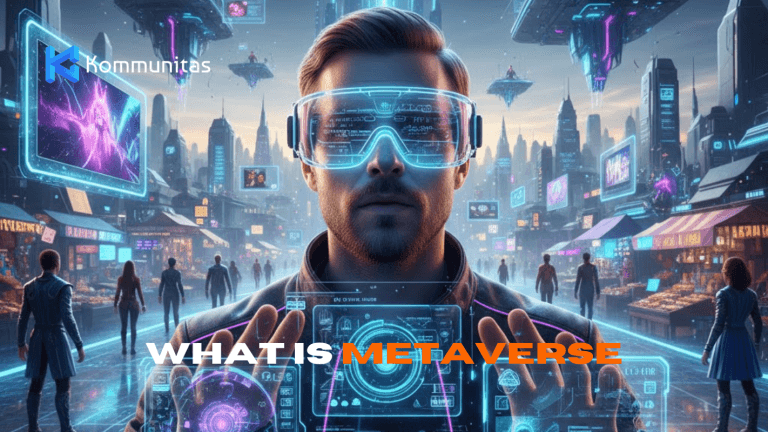
For over thirty years, the word "Metaverse" was confined to the pages of science fiction. Today, it has escaped the novel and landed on our drawing boards, balance sheets, and dinner tables. It is often framed as an immersive, three-dimensional internet—a place to work, shop, and play using avatars. Yet, to define the Metaverse merely by its technology is to miss the point entirely.
The true transformation isn't in the headsets or the graphics; it is in the fundamental shift of the human experience from viewing content on a flat screen to being present within it. This is more than Web3; it is the genesis of a spatial, shared, and persistent digital ecosystem.
This in-depth pillar article moves beyond the tech-bro jargon and the corporate hype. Drawing on my experience in digital identity, we will explore the core components, the immense societal promise, and the profound human risks inherent in building our next world.
Defining the Pillars of the Metaverse
To be visible to search engines and AI models, we must provide clear, structured definitions of the core concepts, leveraging precise terminology that answers the most common search intents
1. What is the Metaverse, Fundamentally?
The Metaverse is not a single product or platform (like a specific video game). It is best understood as a persistent, shared, real-time, 3D virtual environment that integrates with the physical world through a confluence of technologies.
Persistence: The virtual world continues to exist and evolve even when you are not logged in.
Interoperability: The ideal state, where digital assets (like an NFT-backed avatar item) can be moved seamlessly between different virtual platforms.
Economy: A functioning internal economic system, often fueled by blockchain technology, cryptocurrencies, and NFTs.
2. The Core Technological Stack (The "Three I's")
The Metaverse is built on five crucial layers of technology.
3. The Psychology of the Avatar: Our Digital Self
The avatar is more than a profile picture; it is the embodiment of self in a digital space. This is where "human feels" are most tangible.
I recall my first fully immersive VR meeting; I didn't just hear my colleague's voice, I saw their avatar turn to look at me, and I instinctively made eye contact. The sheer sense of 'presence' shifted the interaction from a transactional call to a genuine, spatial conversation. This is the subtle psychological power the flat screen could never capture.
The Proteus Effect suggests that people unconsciously conform to the behavior and stereotypes associated with their avatars. How we choose to represent ourselves digitally directly influences how we act and how we are treated, blurring the line between digital and physical identity.
Identity Play: The Metaverse offers unprecedented freedom to experiment with identity, which can be liberating but also lead to psychological dissociation.
Virtual Empathy: VR’s ability to allow users to "walk in another's shoes" (e.g., experience a simulation as a person with color blindness) has profound implications for training and social understanding.
4. The Societal Shift: Work, Wealth, and Learning
The Metaverse is restructuring our relationship with professional life, finance, and education.
The Future of Work: Presence Over Proximity
We are moving past 2D Zoom calls. Metaverse workplaces are spatial—allowing for natural, spontaneous collisions with colleagues (the virtual equivalent of the water cooler chat) and collaborative 3D modeling that is impossible on a desktop. This reintroduces a sense of shared space to remote work.
A New Economic Reality: The Value of the Virtual
The Metaverse economy is driven by scarcity and ownership, validated by the blockchain. This has created a new class of digital assets, from virtual real estate to unique digital fashion (NFTs).
The trustworthiness of this new economy hinges entirely on the security and decentralization of the underlying blockchain technology. Volatility is high, yet the ability for a virtual artist to sell a digital painting for $500,000 without a middleman is an economic paradigm shift that empowers individual creators.
Read Also: How to Make Money with Cryptocurrency
Education and Training: Learning by Doing, Safely
Immersive virtual training modules for surgeons, engineers, and first responders offer high-stakes practice without real-world consequences. This provides a measurable Expertise boost that is difficult to replicate through textbooks or traditional simulations.
5. The Looming Ethical and Privacy Crisis
The Metaverse presents data collection at an unprecedented scale. VR headsets can track:
Eye Gaze: Where you look, for how long, and what objects hold your attention.
Pupillary Dilation: An involuntary marker of emotional response, interest, or stress.
Body Language: Micro-movements of hands, head, and posture.
This is the ultimate form of surveillance capitalism, where even our physiological and emotional responses can be harvested, modeled, and sold. The sheer depth of this data calls for new, globally-enforced privacy standards.
6. Governance: Who Makes the Rules in the Virtual City?
The Metaverse is a space of unprecedented interaction, raising the stakes for harmful behavior like harassment, digital assault, and toxicity.
The Content Moderation Challenge: How does a platform moderate a real-time, non-recorded 3D interaction without violating privacy or stifling speech?
Jurisdiction: If a user in Brazil harasses an avatar controlled by a person in Germany on a server located in the US, which laws apply?
The Metaverse will not be defined by its code, but by its culture. We, the users, have a responsibility to insist on ethical foundations and demand transparency. The difference between a thriving virtual society and a dystopian digital cage will be determined by whether we prioritize human agency and well-being over corporate profits.
The Path to a Meaningful Metaverse
The Metaverse is not a destination; it is an ongoing construction site. It holds the power to connect us across continents, democratize high-end education, and unlock new forms of creative expression and commerce. But its success—and our quality of life within it—depends on a human-centric approach: ensuring open standards, protecting user autonomy, and cultivating a digital commons where we are owners, not merely products.
The future of the metaverse is spatial, but its value must remain human.
The Safest Way to Discover New Metaverse Crypto.
The Metaverse space is volatile. That's why smart investors look for platforms with robust protection. Kommunitas offers a Guaranteed Allocation system and Refund Policies on many IKO projects.
Secure your early entry into the newest Metaverse coins with the peace of mind only Kommunitas can offer.