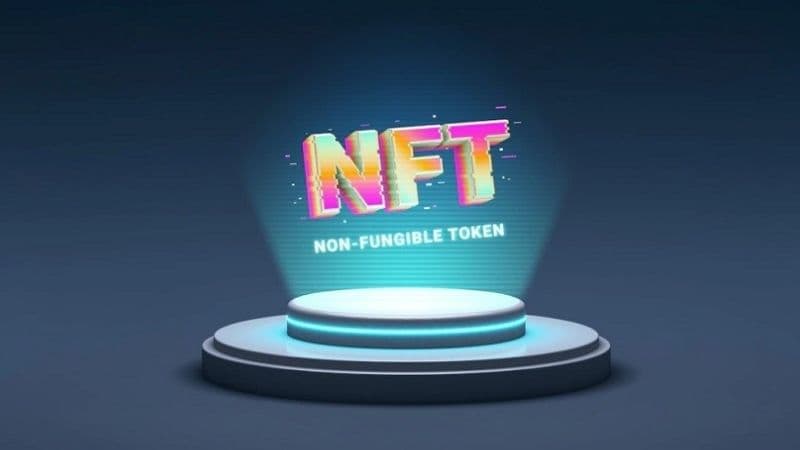
When the world economy was on the verge of a disastrous historic collapse, the market for Non-Fungible Tokens emerged like a beam of light from the darkness. NFTs, or Non-Fungible Tokens, are digital collectibles that represent physical goods. They may represent anything, from a human cell to a thousand-dollar-worth original art work.
The market for Non-Fungible Tokens is expanding rapidly, thanks to strong engagement from investors searching for new sources of revenue. Throughout this, NFT utility initiatives are gaining prominence in order to broaden the reach of NFTs in the financial arena.
These digital assets provide the benefits of non-fungible tokens while also serving a utility or purpose for token owners. Holders of utility NFTs have the opportunity to get rights and privileges that would otherwise be accessible to them in standard arrangements.
What Exactly Are Utility Nfts?
The field of NFTs is currently in its early phases of investigating any value-based real-world applications for NFTs. Non-fungible tokens are cryptographically distinct and can be used for purposes other than picture storage on a blockchain network. The worth of an NFT utility token can go beyond just investment in the transformation of how we work, engage, and play.
A utility NFT is defined as non-fungible tokens with applications other than the representation of unique digital assets. One of the distinguishing features of high utility NFTs is the availability of privileges, prizes, or rights to owners, which they would not otherwise find. To comprehend a utility NFT, consider the following basic example.
Assume you've arranged a performance with around 800 open places and 800 paper tickets. In terms of ticket number, each ticket is unique and distinct from the others. However, each ticket piece serves the same purpose, namely admission to the event. Now, NFT utility concepts may entail issuing 800 NFTs rather than 800 paper tickets. Each NFT would be unique and provide the same utility of event entry.
NFTs having a utility function are the NFT space's future. If you’re interested in NFTs, we highly advises looking for initiatives that have real-world and demonstrable benefit. Yes, some projects have little usefulness but have gained in value for the holders. Nonetheless, these situations are considerably more tenuous than the media portrays.
At the time of writing, the world's largest NFT marketplace, OpenSea, had approximately 23 million assets for sale. Not all of these assets will be valued, especially given the vastness of the NFT world.
How Do Utility NFTs Function?
For its infrastructure superiority, NFTs rely on blockchain and smart contract technologies. Digital collectibles assist holders in enforcing ownership claims on physical and intangible real-world assets. To provide the highest level of safety, transparency, and immutability, each transaction is kept on the decentralized public ledger. The Ethereum blockchain network is used by the majority of utility NFTs to access smart contracts. NFT utility have a similar structure to conventional NFTs. They also utilize cryptographic encryption to assure transaction security and immutability.
The one-of-a-kind ID and information that no other token can reproduce contribute to NFTs' uniqueness. Smart contracts provide ownership and limit transferability for these non-fungible assets. The miner runs the logic in the smart contract that adheres to numerous standards such as ERC-721 when minting an NFT. The retrieved data is stored on the blockchain that manages the NFT. The minting process consists of three steps:
· Making of a new block
· Data validation
· Uploading validated data to the blockchain
The smart contract functionality allows certain pre-determined requirements to be met in order for a transaction to take place. This allows creators to enforce their right to royalties in perpetuity whenever their work is acquired. The NFT course list provided by online portals such as Blockchain Council may assist you in understanding the operation of utility NFTs in a straightforward manner.
Read Also: What Is a Fiat Wallet and It Works
How Do You Change Standard (Regular) NFTs to Utility NFTs?
The inclusion of utility to standard NFTs would likely be the most striking element of a discussion on utility non-fungible tokens. Many of you have probably wondered how to add usefulness to an NFT for a certain purpose. Is a separate NFT with fresh and sophisticated technologies required to provide desired utility? No. There are several ways to add usefulness to an individual NFT or an NFT collection.
The technique for providing utility in non-fungible tokens is based on technological reforms rather than technological modifications. A simple example of utility tokens from the music business will help you come up with a concept for adding usefulness to non-fungible tokens. In March 2021, Kings of Leon published their album as an NFT compilation.
While giving many NFT utility variations in the record, the band also utilized traditional outlets like as iTunes and Spotify. The album includes a limited edition vinyl copy as well as an NFT with digital artwork and a digital music download option. Another NFT version in the album's release enabled front-row seating at Kings of Leon performances and shows. Surprisingly, the NFT music record sold about $2 million copies.
The use of NFTs in a novel way in a music CD revolutionized how customers discovered usefulness with non-fungible tokens. You can see how utility NFTs aided in providing purchasers with more than simply a music record.
Music fans, who are the intended audience for such utility non-fungible tokens, may exchange their NFTs for vinyl record copies of the real album. Furthermore, music utility NFT users can receive special benefits like as front-row seats to the band's concerts. The Kings of Leon music CD release as a series of NFTs is a compelling argument for utility non-fungible tokens.
In Conclusion
Utility NFT development is still in its early phases and will take a long time to mature into a major force of change. The notion of usefulness in non-fungible tokens demonstrates that NFTs are more than just beautiful art and collectors. Furthermore, the concepts for improving utility to an NFT are centered on modifying the techniques for using non-fungible tokens rather than changes to the technology itself.
As NFT utility uncover many use cases, the potential for utility will become increasingly significant in the future of NFT. NFTs can, for example, replace season tickets, health insurance cards, and loyalty cards. Businesses may utilize NFTs to advertise by providing discounts to owners. Similarly, many other businesses can experiment with novel utilities using NFTs.