
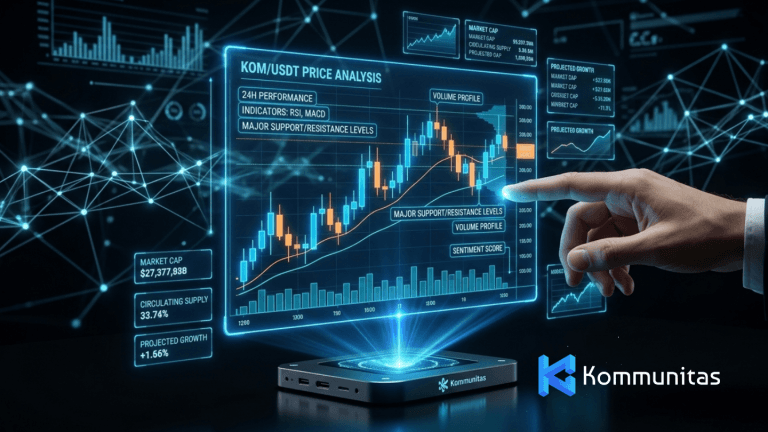
In the traditional financial world, "credit risk" is the bread and butter of banks. Before a loan is issued, an army of analysts uses credit scores, debt-to-income ratios, and historical data to predict one thing: the probability of default.
In the world of Web3 and decentralized launchpads, the stakes are even higher. We aren’t just lending money; we are injecting capital into early-stage protocols. Here, credit risk isn't just about a borrower not paying back a loan—it’s the risk of a project "dying," liquidity drying up, or a smart contract failing.
To survive and thrive as a crypto investor, you need to think like a DEX Analyst. By applying professional credit risk modeling to decentralized data, we can move from "guessing" to "calculating" our way to success.
What is "Credit Risk" in a Decentralized World?
In DeFi, we redefine credit risk. It is the measurable probability that a digital asset or platform will fail to meet its obligations to its holders. This typically manifests in two ways:
Asset Death: The price drops significantly, liquidity vanishes, and the project becomes a "dead coin."
Platform Closure: A decentralized exchange (DEX) or launchpad ceases operations, often due to poor governance or security breaches.
At Kommunitas, our tierless model is designed to democratize access, but that freedom comes with a responsibility for every investor to understand the underlying risk metrics of the projects they back.
The Power of DEX Analytics: Beyond the Price Chart
Traditional credit scoring uses the "5 Cs" (Character, Capacity, Capital, Collateral, and Conditions). In Web3, we use On-Chain Analytics to build a digital scorecard.
1. Liquidity Health & Volatility
DEX analytics allow us to look at the Daily Range Volatility. Research shows that analyzing the "High-Low" spread of a token on a DEX is often more predictive of "death" than simple closing prices. High volatility combined with thinning liquidity is a leading indicator of a weakened credit position.
2. The "Probability of Death" (PD) Model
Advanced analytics labs use machine learning—including XGBoost and Random Forest algorithms—to process lagged trading volumes and social sentiment. For a crypto investor, the "Probability of Death" is the ultimate metric. If a project’s on-chain activity (active wallets, transaction frequency) drops while its "online search" volume spikes for negative reasons, the credit risk is skyrocketing.
3. Smart Contract Integrity
In DeFi, the code is the collateral. A "credit-worthy" project is one with a "Battle-Tested" smart contract. This means:
Multi-sig requirements for treasury management.
Time-locks on developer tokens.
Third-party audits from reputable security firms.
Practical Workflow: A Credit Risk Checklist for IDO Investors
Before you hit "Commence" on your next allocation, run the project through this analytical framework:
Phase 1: Quantitative Audit (The Numbers)
Liquidity-to-Market Cap Ratio: Is there enough depth in the DEX pools to support a 5% sell order without a 20% price impact?
Vesting Schedule: Does the "Credit Risk" increase at specific dates? Check for large token unlocks that could create "death spirals."
Holder Concentration: Use a block explorer to see if the top 10 wallets (excluding exchange/burn addresses) hold more than 50% of the supply.
Phase 2: Qualitative Audit (The Fundamentals)
The Team (Character): Is the team "doxxed" (publicly identified)? Public accountability is a massive risk mitigator.
Product-Market Fit (Capacity): Does the project generate real revenue or utility, or is it purely speculative?
Phase 3: Security Benchmark
Audit Status: Has the project been audited? If so, were the "Critical" and "High" issues resolved?
Bug Bounty: Does the project have an active reward program for ethical hackers?
Comparative Risk Table: High vs. Low Credit Risk Projects
FAQ: Navigating Risk on Kommunitas
Q: Does a "Tierless" launchpad like Kommunitas have more risk?
A: Actually, it reduces a specific type of risk: Entry Risk. In tiered systems, you often risk a massive loss on the "Launchpad Token" itself just to get an allocation. Kommunitas allows you to participate with what you are comfortable with, removing the barrier of "forced" high-capital exposure.
Q: Can I use machine learning tools to analyze IDOs?
A: Yes. Many platforms provide API access to DEX data. You can track metrics like "ZPP" (Zero-Price Probability) by simulating price trajectories based on historical DEX volatility.
Q: What is the most important "DEX Metric" for a newbie?
A: Total Value Locked (TVL) and Volume/Liquidity ratio. If a project has $10M in market cap but only $50k in DEX liquidity, the credit risk is extremely high because you cannot easily exit your position.
Conclusion: Invest with Authority
In the high-reward world of Initial KOMmunity Offerings (IKOs), the difference between a winning portfolio and a "dead" one is the ability to assess credit risk through a technical lens. By utilizing DEX analytics—monitoring liquidity, team transparency, and smart contract health—you transition from a gambler to a calculated investor.
Next Step: Head over to the Kommunitas IKO Calendar and pick one upcoming project. Apply the "Practical Workflow" we discussed today. Don't just look at the hype; look at the data.
References
Crypto Exchanges and Credit Risk: Modeling Probability of Closure - MDPI Journal
Assessing the Credit Risk of Crypto-Assets Using Daily Range Volatility Models - Journal of Risk and Financial Management
Credit Risk Modeling with Machine Learning - DexLab Analytics Research